The Wall
The wall appears as a living surface: a place that absorbs pressure, keeps memory, and carries the marks of time.
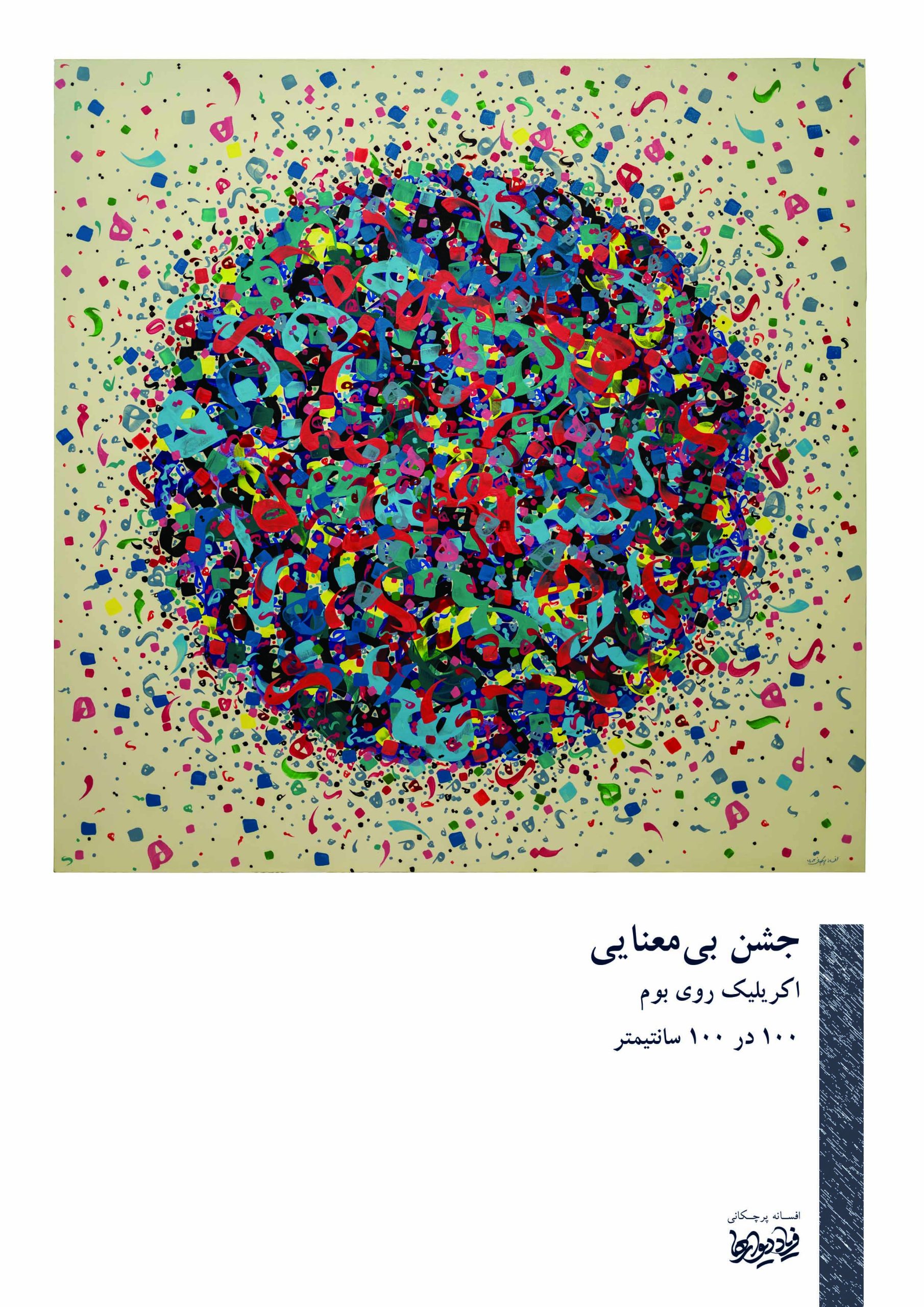
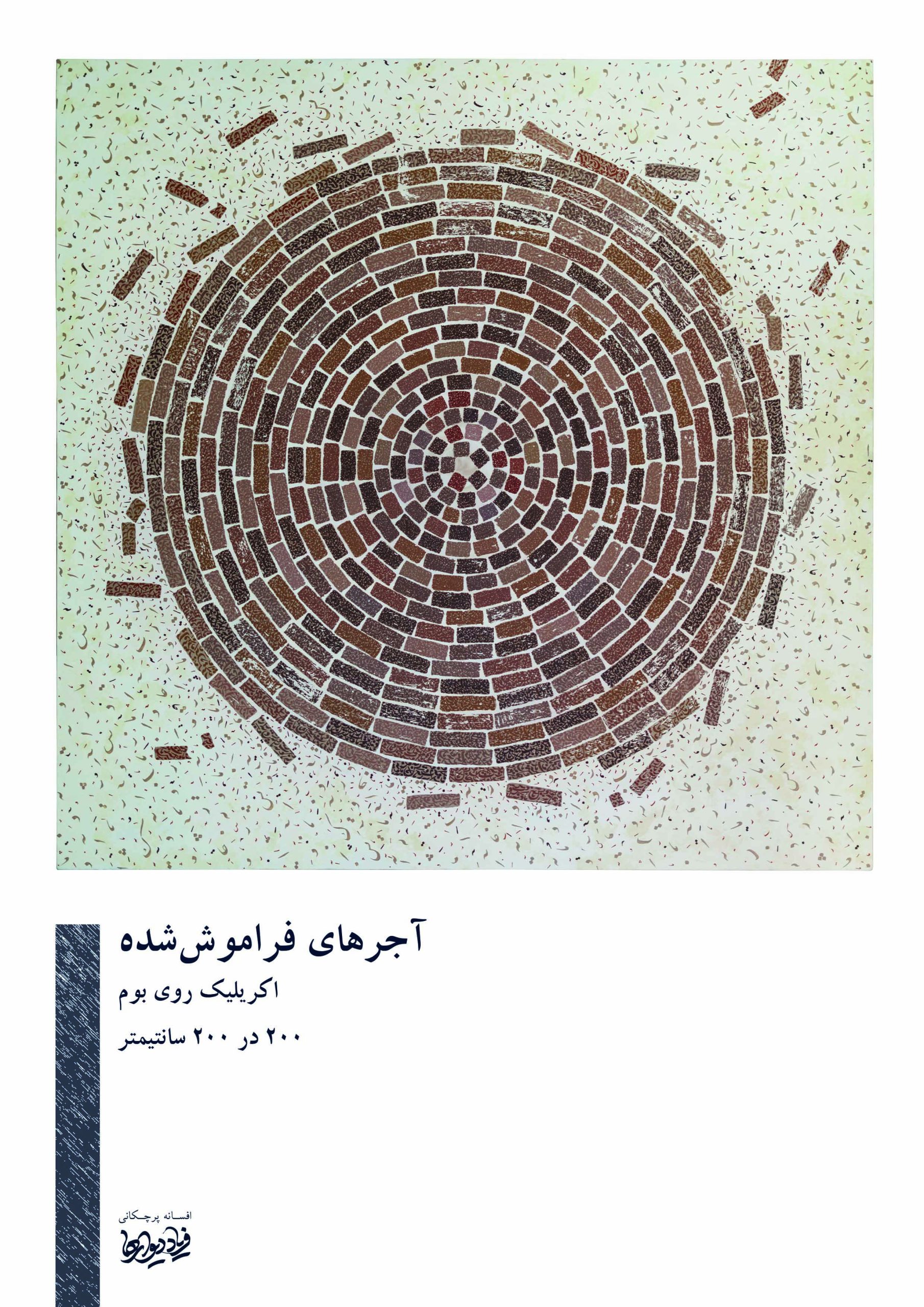
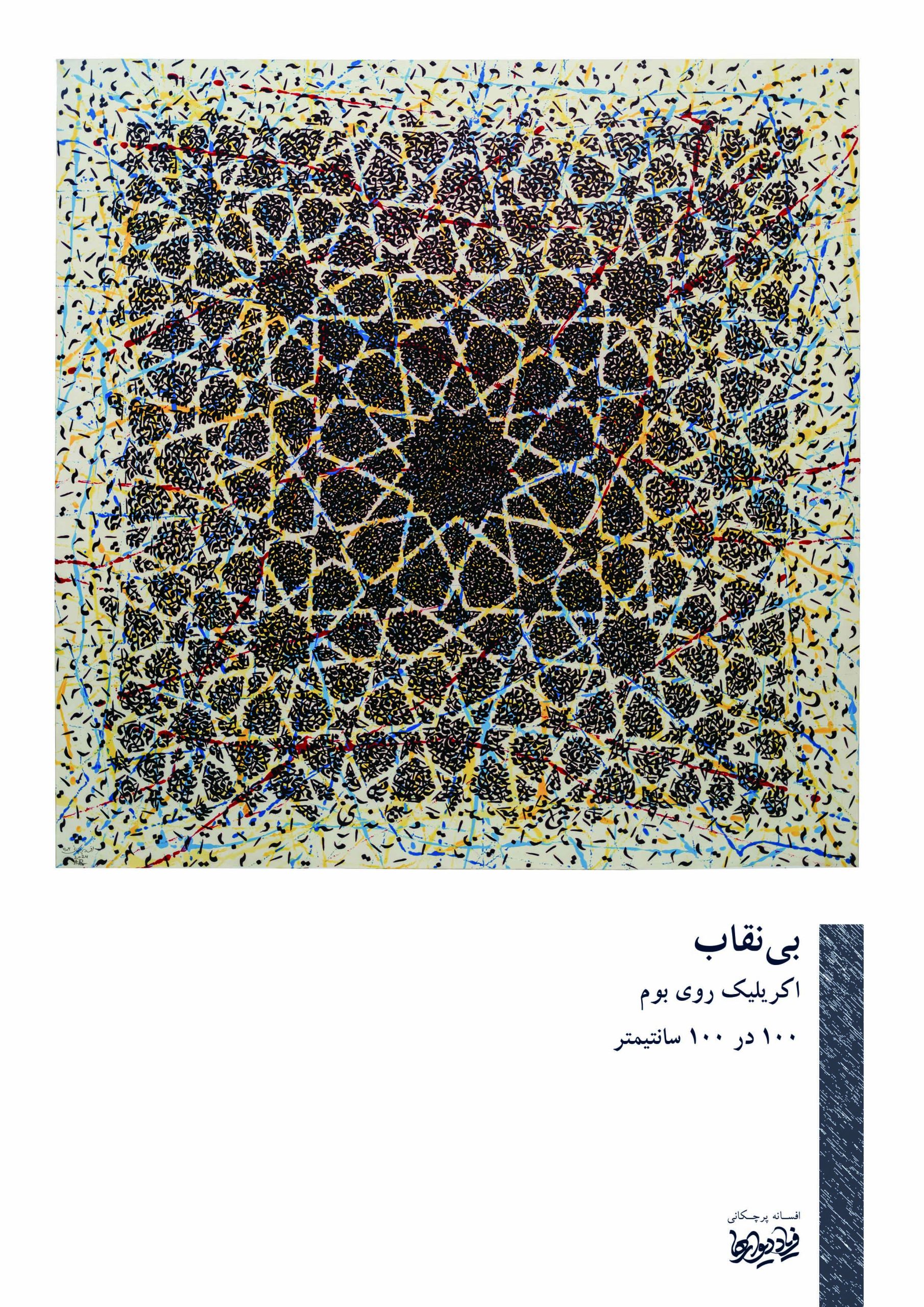
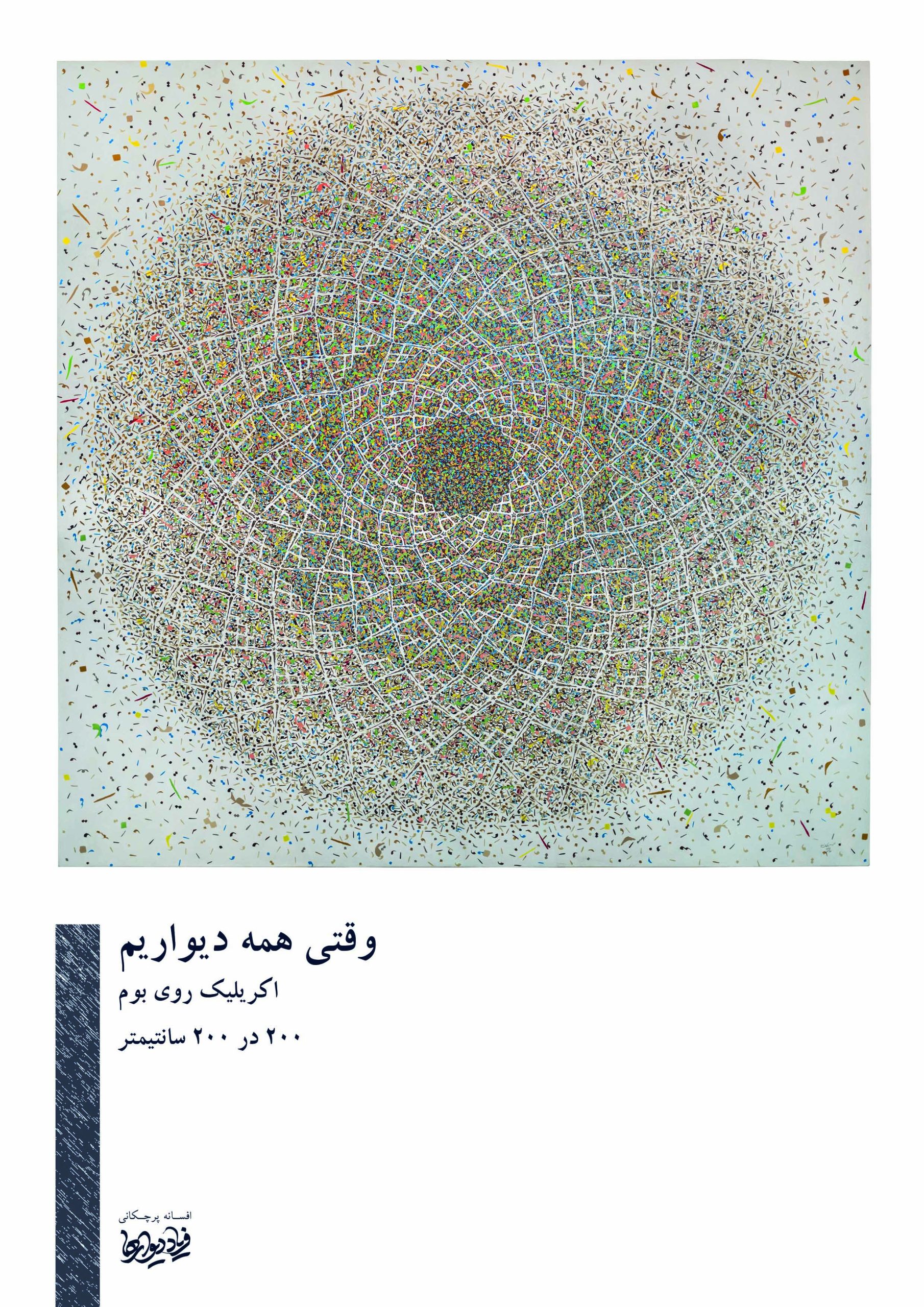
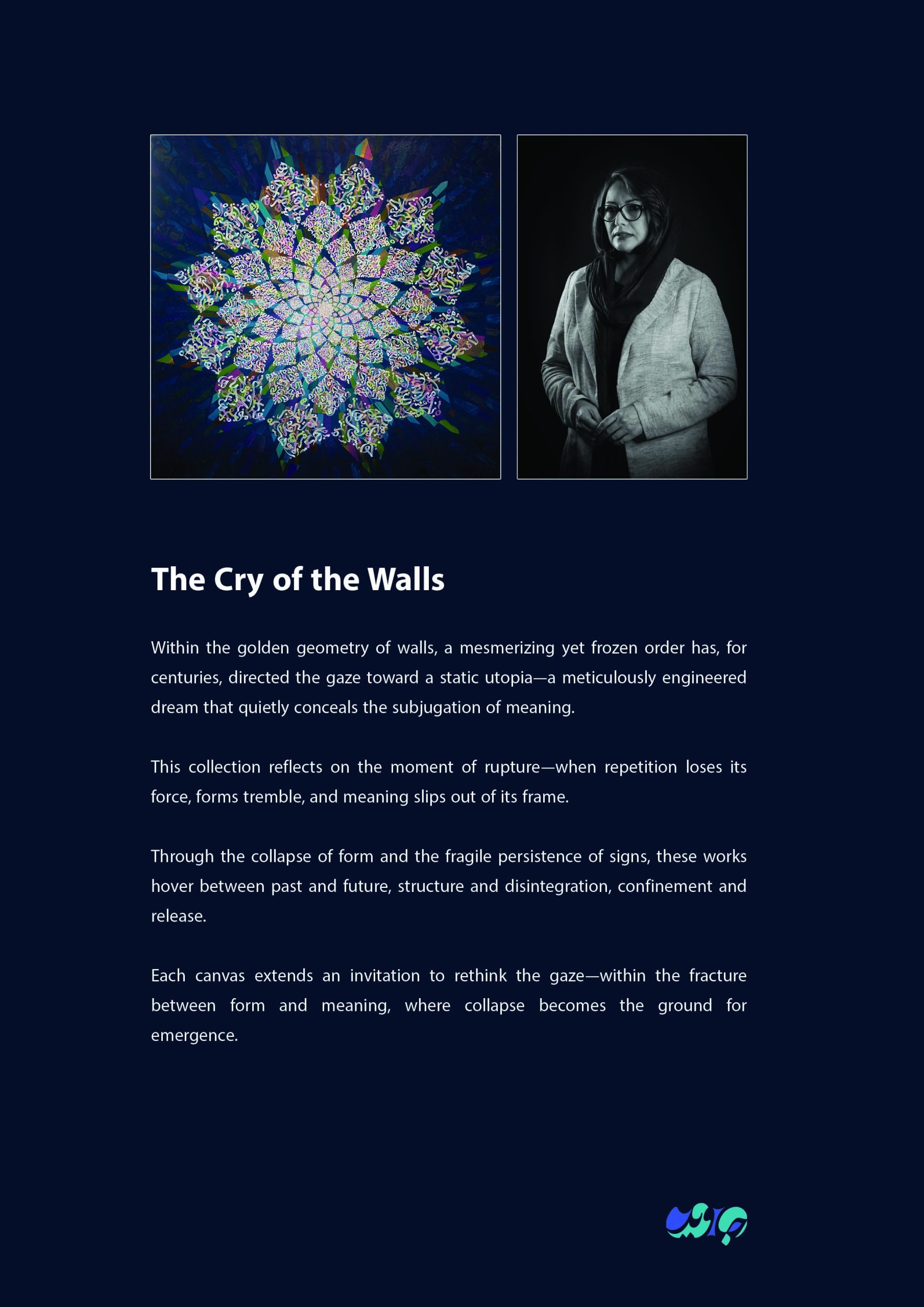
A solo exhibition by Afsaneh Parchekani, exploring walls as visual fields of pressure, memory, rupture and release. In this body of work, the wall is not silent; it becomes a witness, a surface of tension, and a place where forms begin to break.
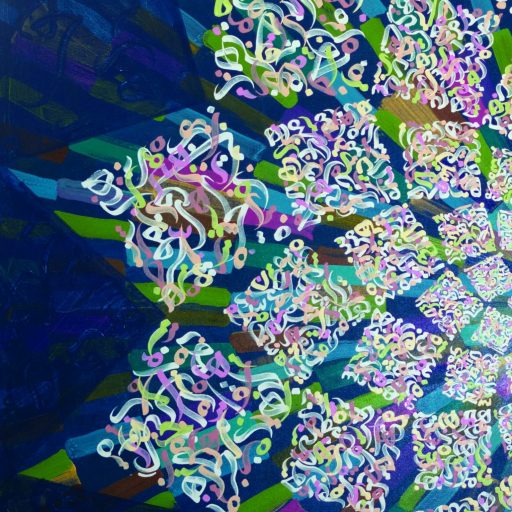
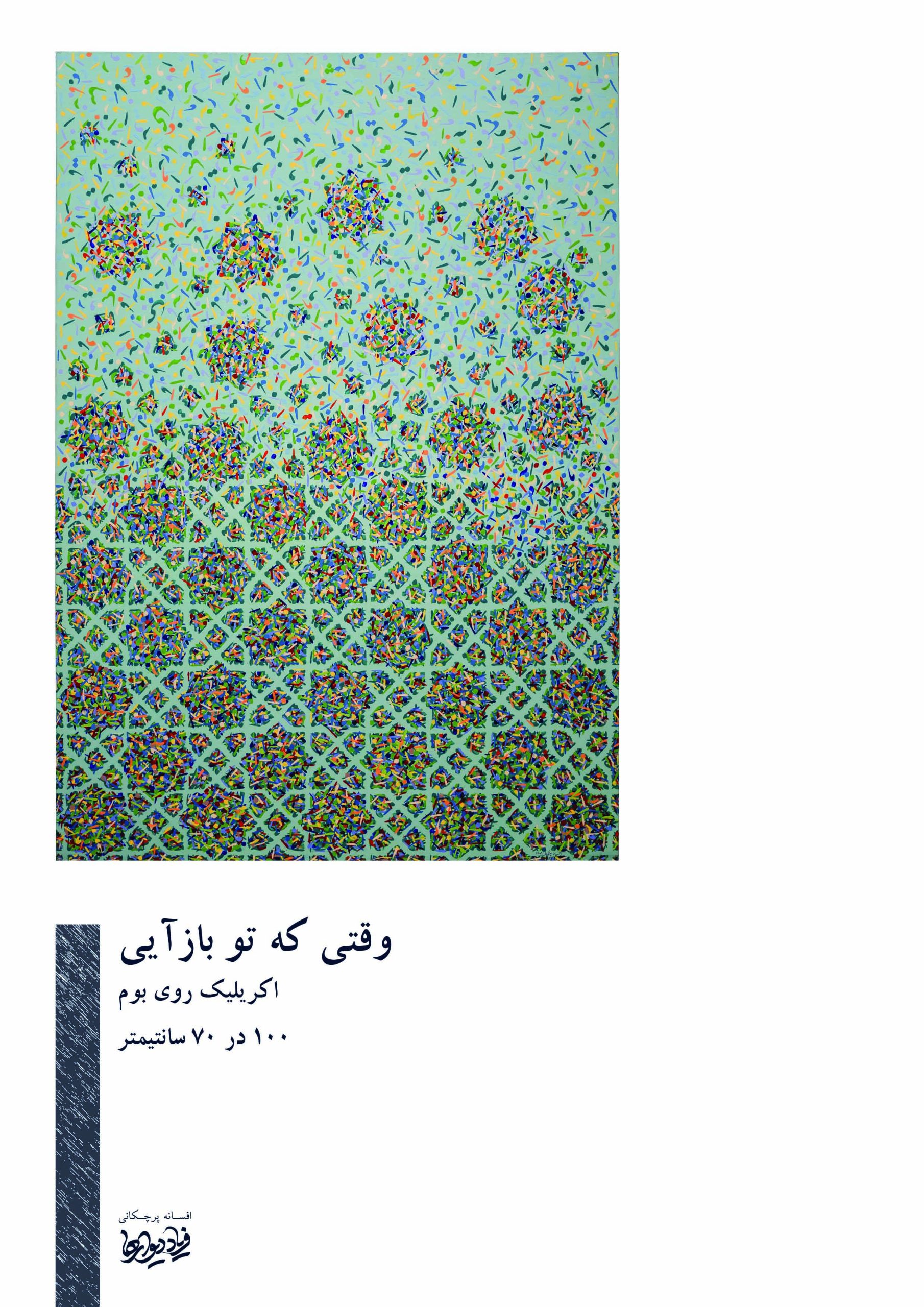
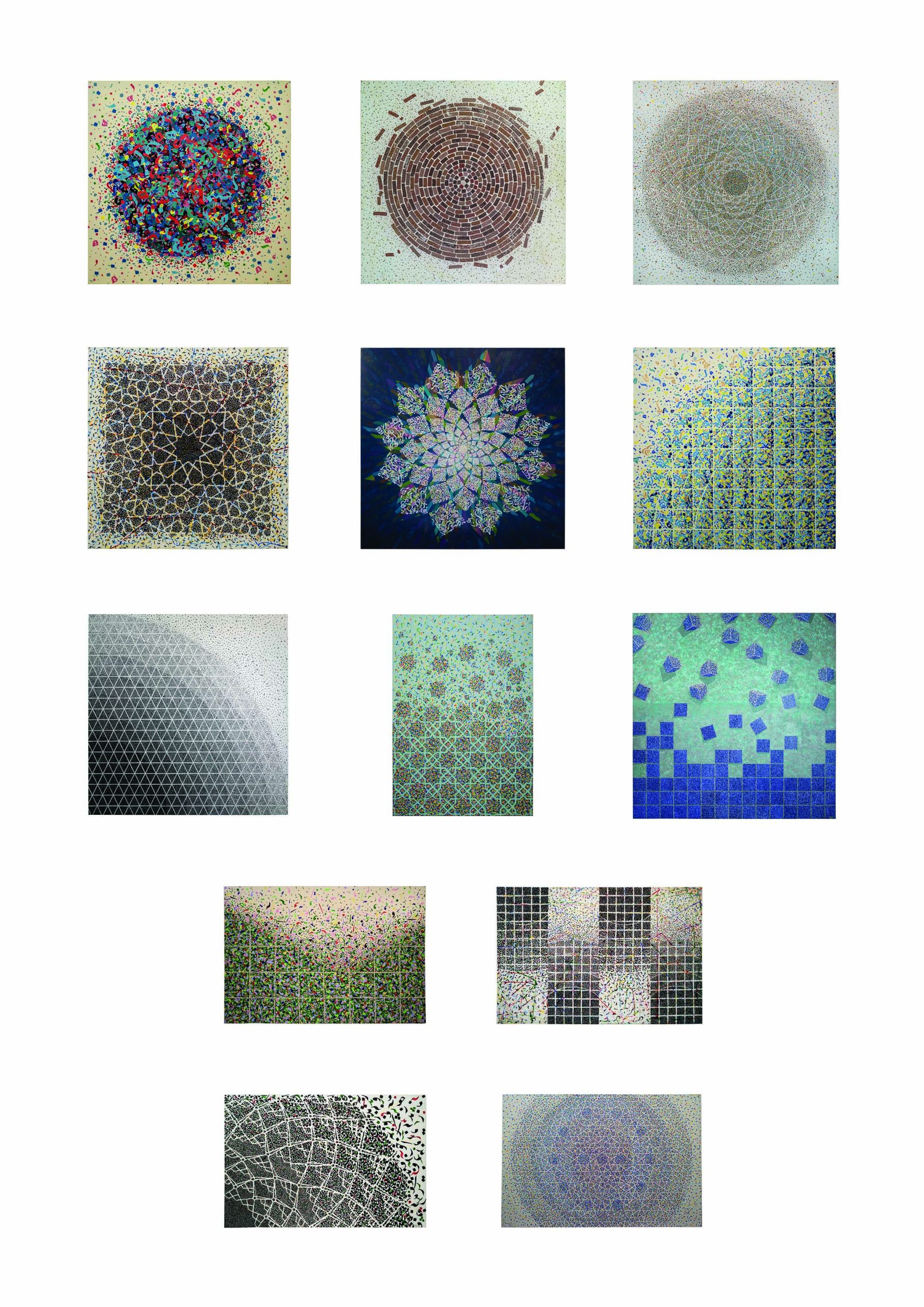
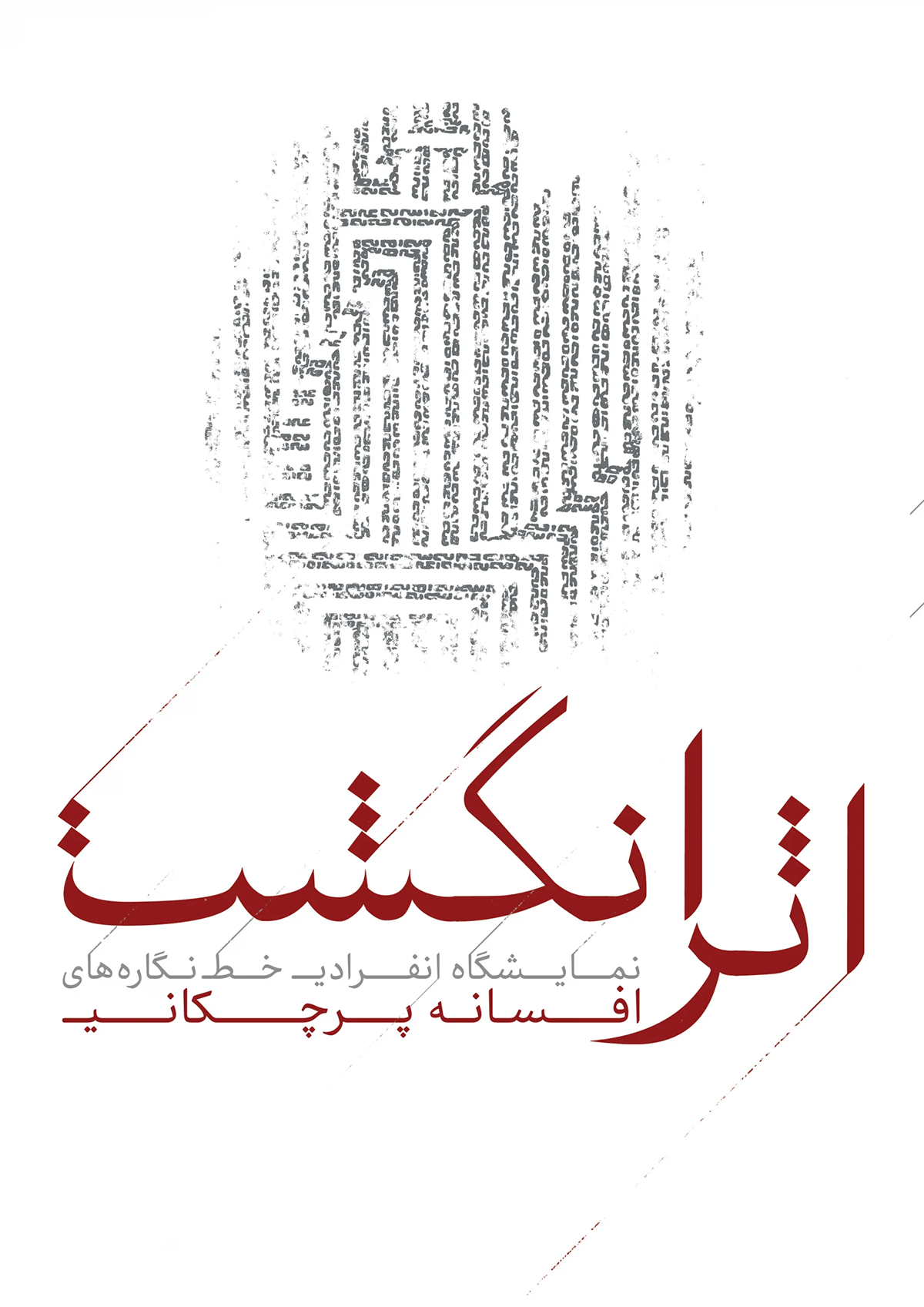
Faryade Divarha continues Afsaneh Parchekani’s visual research into signs, memory and social experience. While her previous exhibition, Asare Angosht, began from letters and written identity, this exhibition moves toward the image of the wall: a surface that holds pressure, silence, damage and memory.
The works create a visual dialogue between order and collapse. Lines, forms and fragments appear as if they are trying to escape their own structure. The wall becomes a field of resistance — not only a physical surface, but a psychological and historical one.
The wall appears as a living surface: a place that absorbs pressure, keeps memory, and carries the marks of time.
Forms in the exhibition move between construction and collapse, suggesting the moment when meaning begins to break open.
The exhibition looks at memory not as a fixed image, but as a layered, unstable and emotionally charged surface.
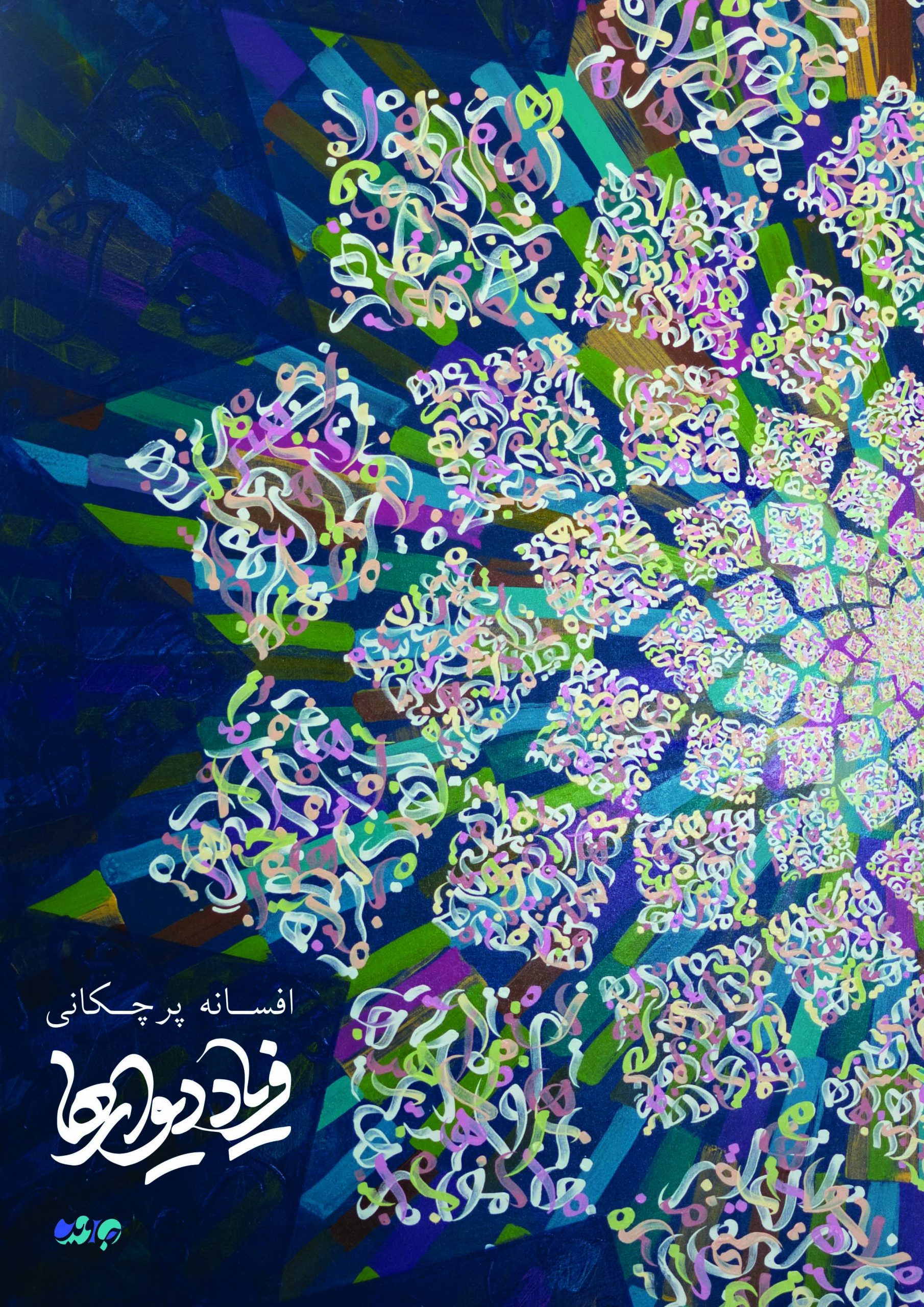
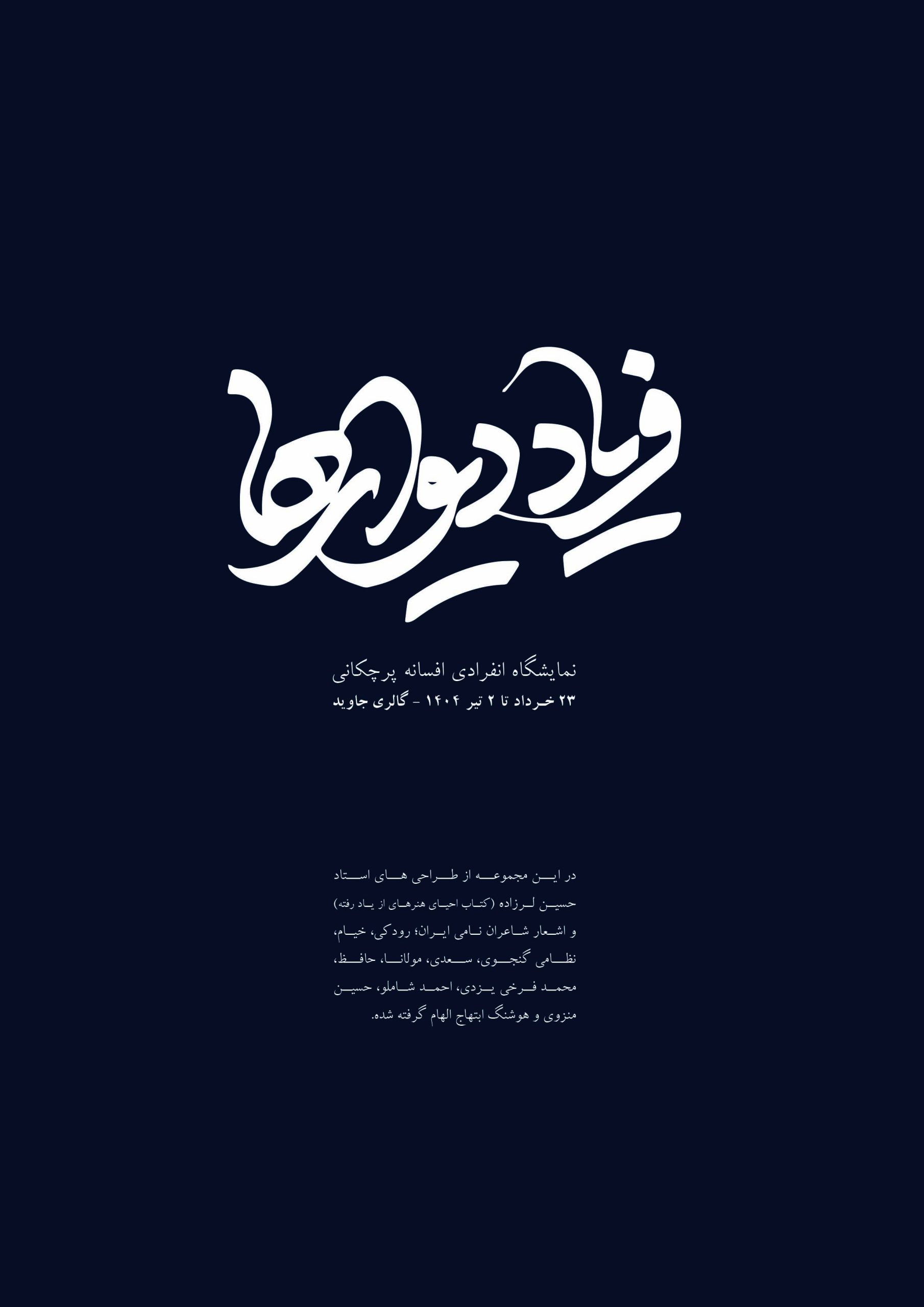
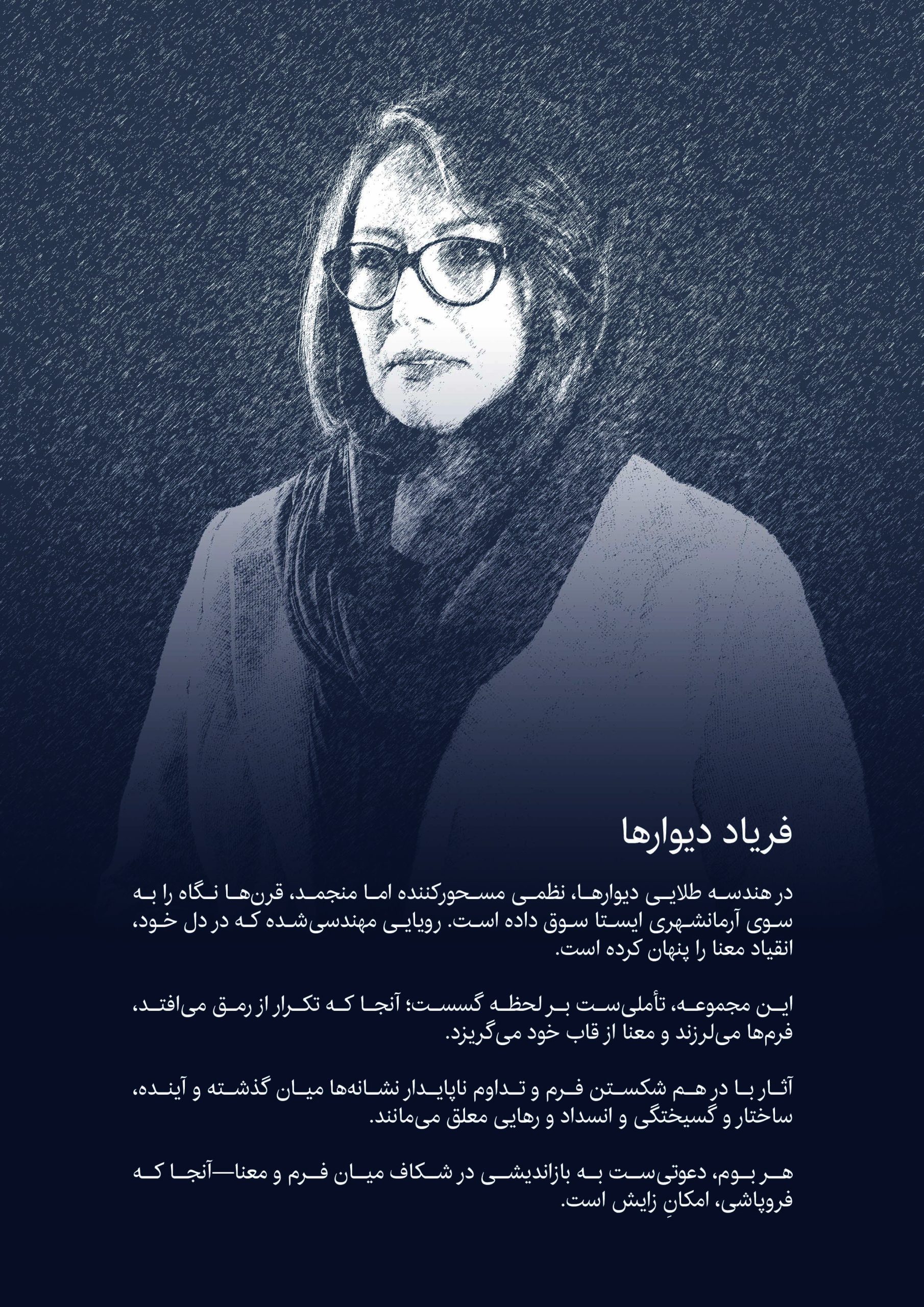
A visual archive of the Faryade Divarha exhibition catalogue, arranged page by page from the original exhibition material.
Cover
Faryade Divarha
 Page 001
Catalogue Page
Page 001
Catalogue Page
 Page 002
Catalogue Page
Page 002
Catalogue Page
 Page 003
Catalogue Page
Page 003
Catalogue Page
 Page 004
Catalogue Page
Page 004
Catalogue Page
 Page 005
Catalogue Page
Page 005
Catalogue Page
 Page 006
Catalogue Page
Page 006
Catalogue Page
 Page 007
Catalogue Page
Page 007
Catalogue Page
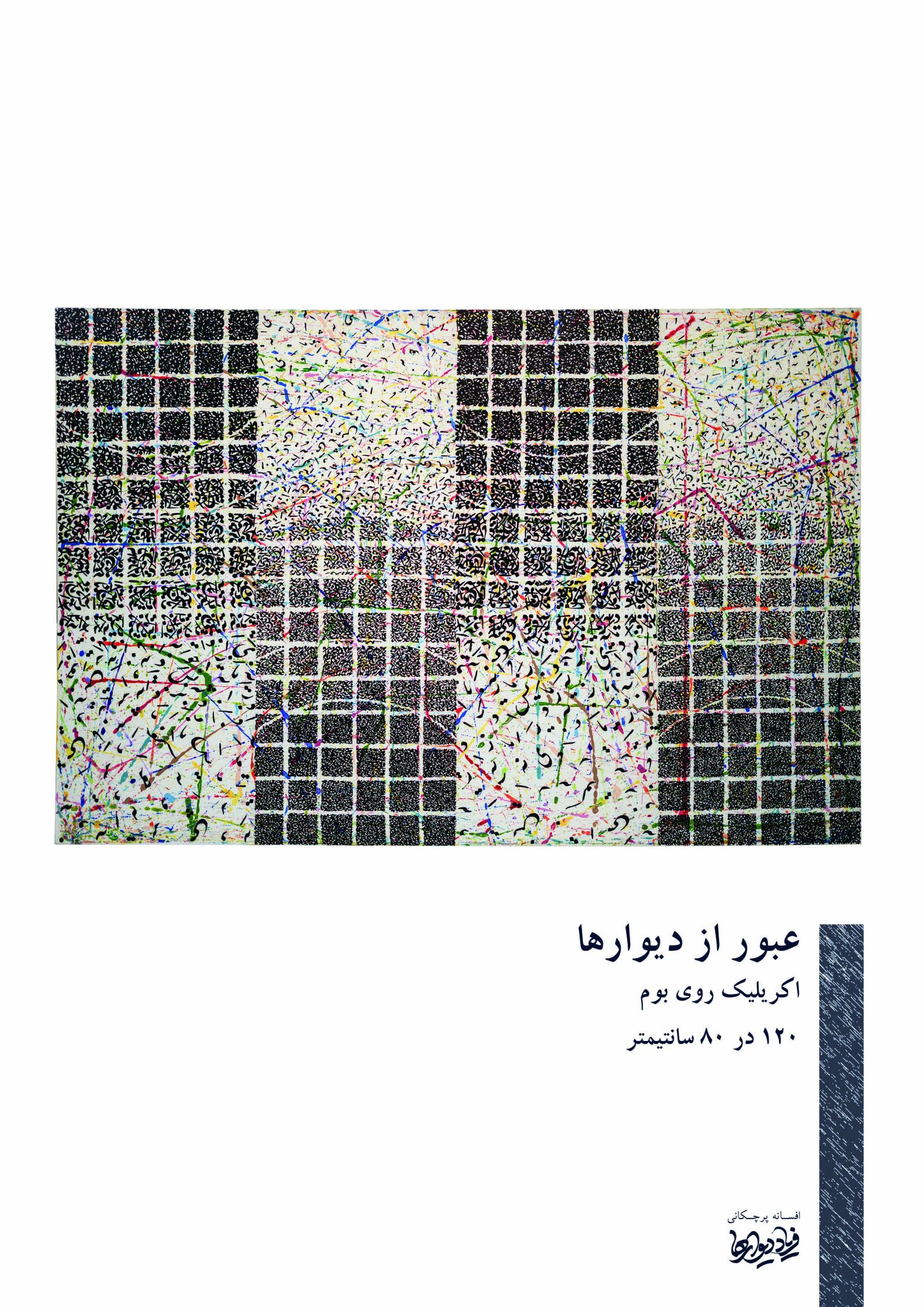 Page 008
Catalogue Page
Page 008
Catalogue Page
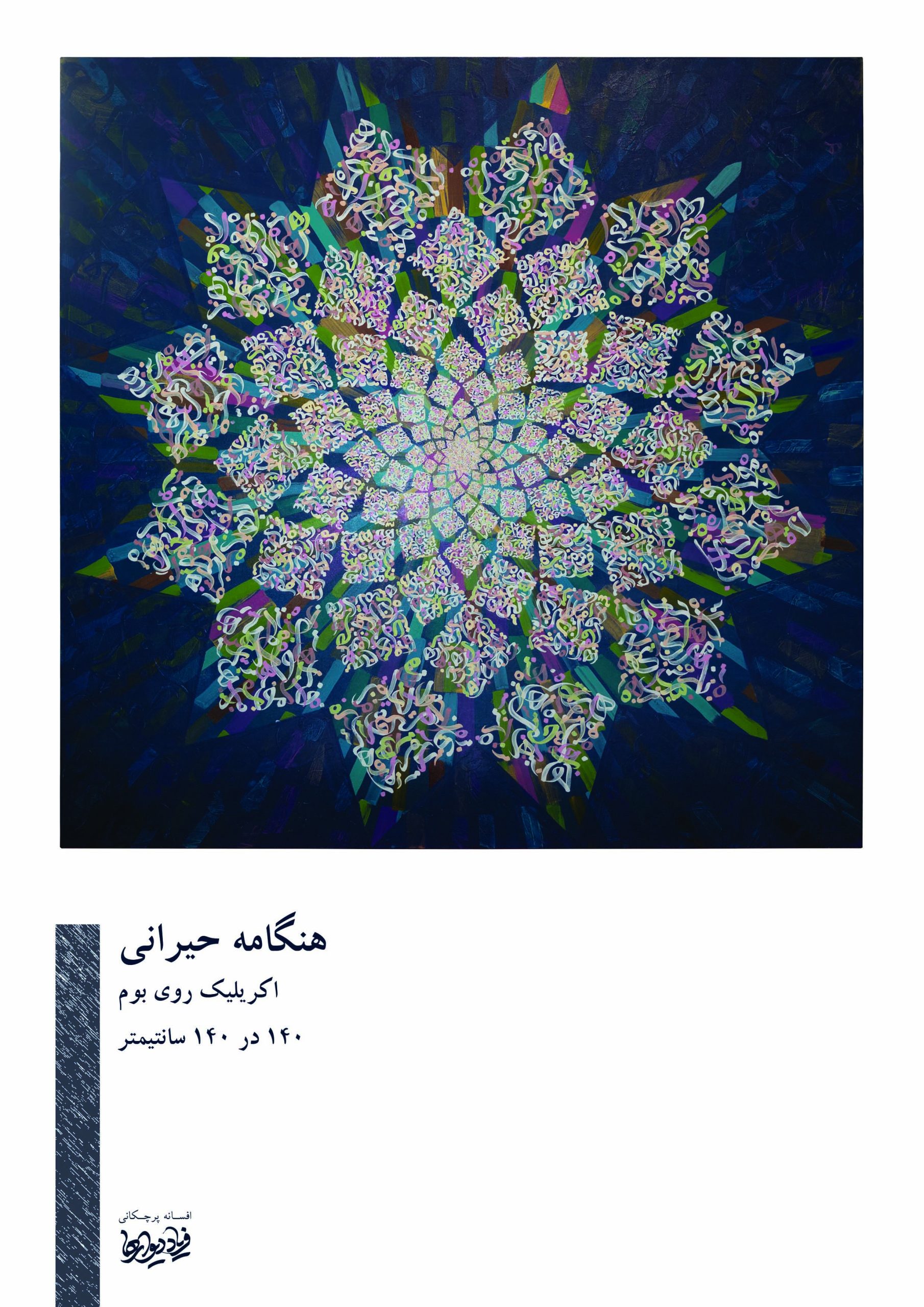 Page 009
Catalogue Page
Page 009
Catalogue Page
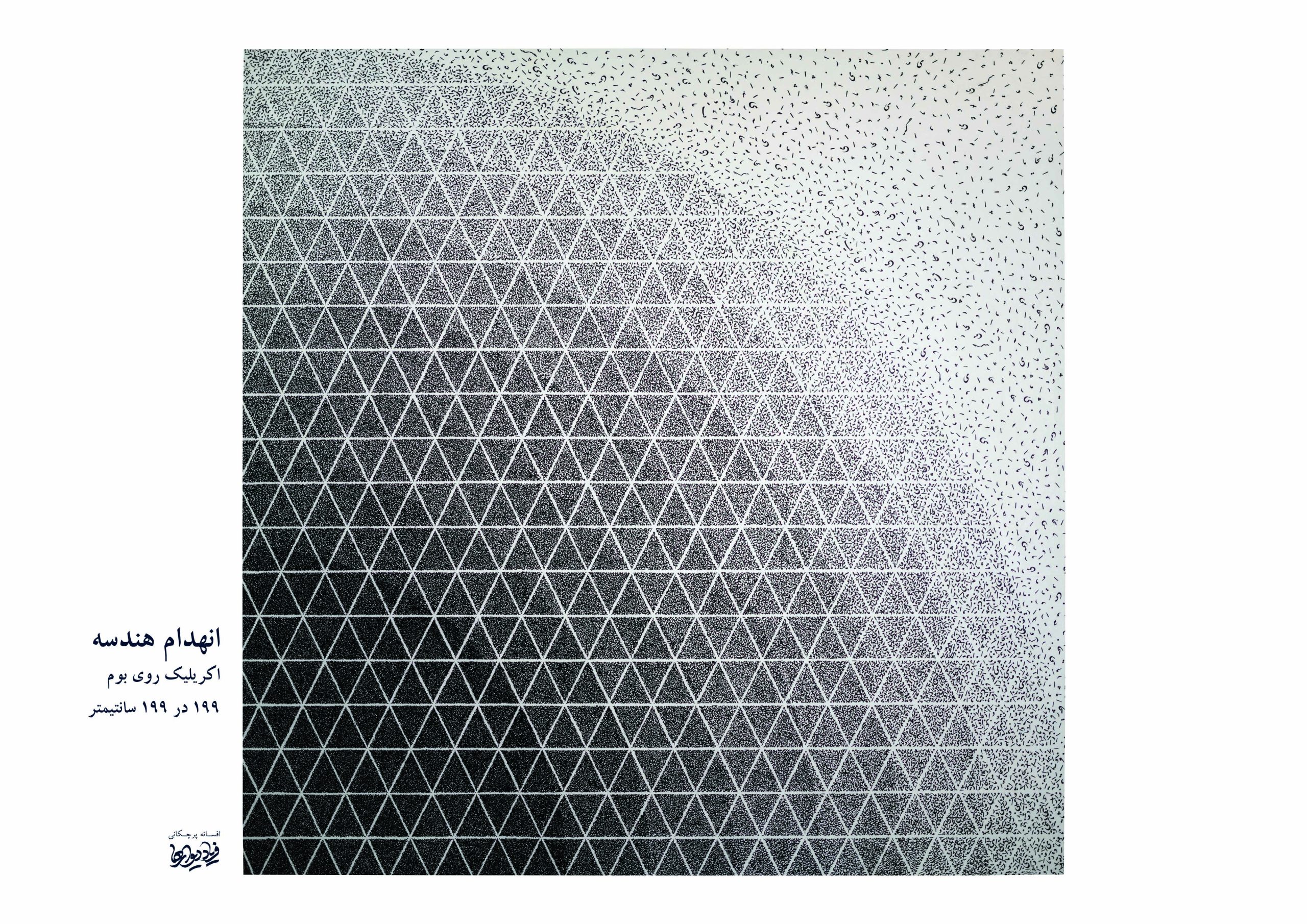 Pages 010–011
Double Page
Pages 010–011
Double Page
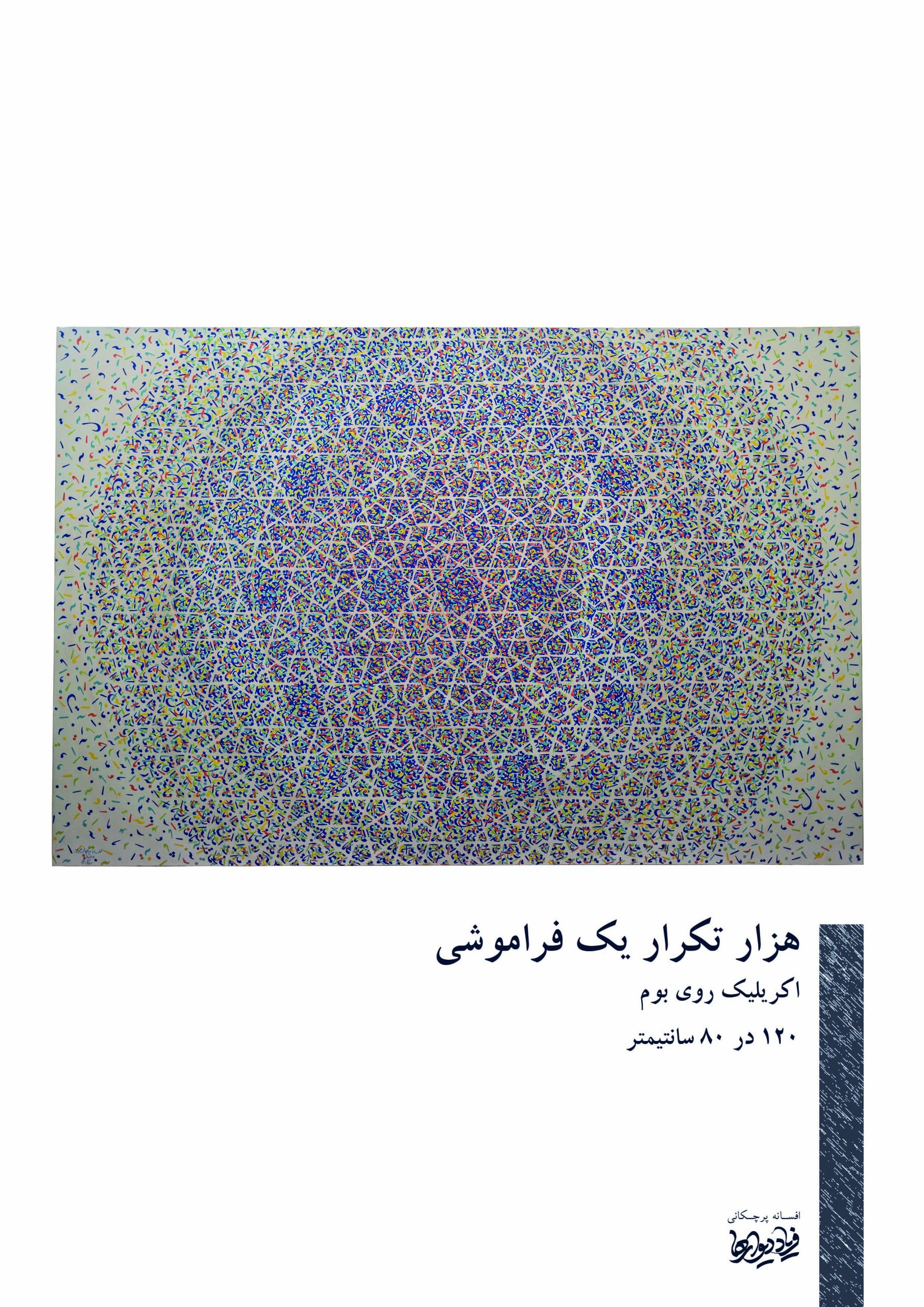 Page 012
Catalogue Page
Page 012
Catalogue Page
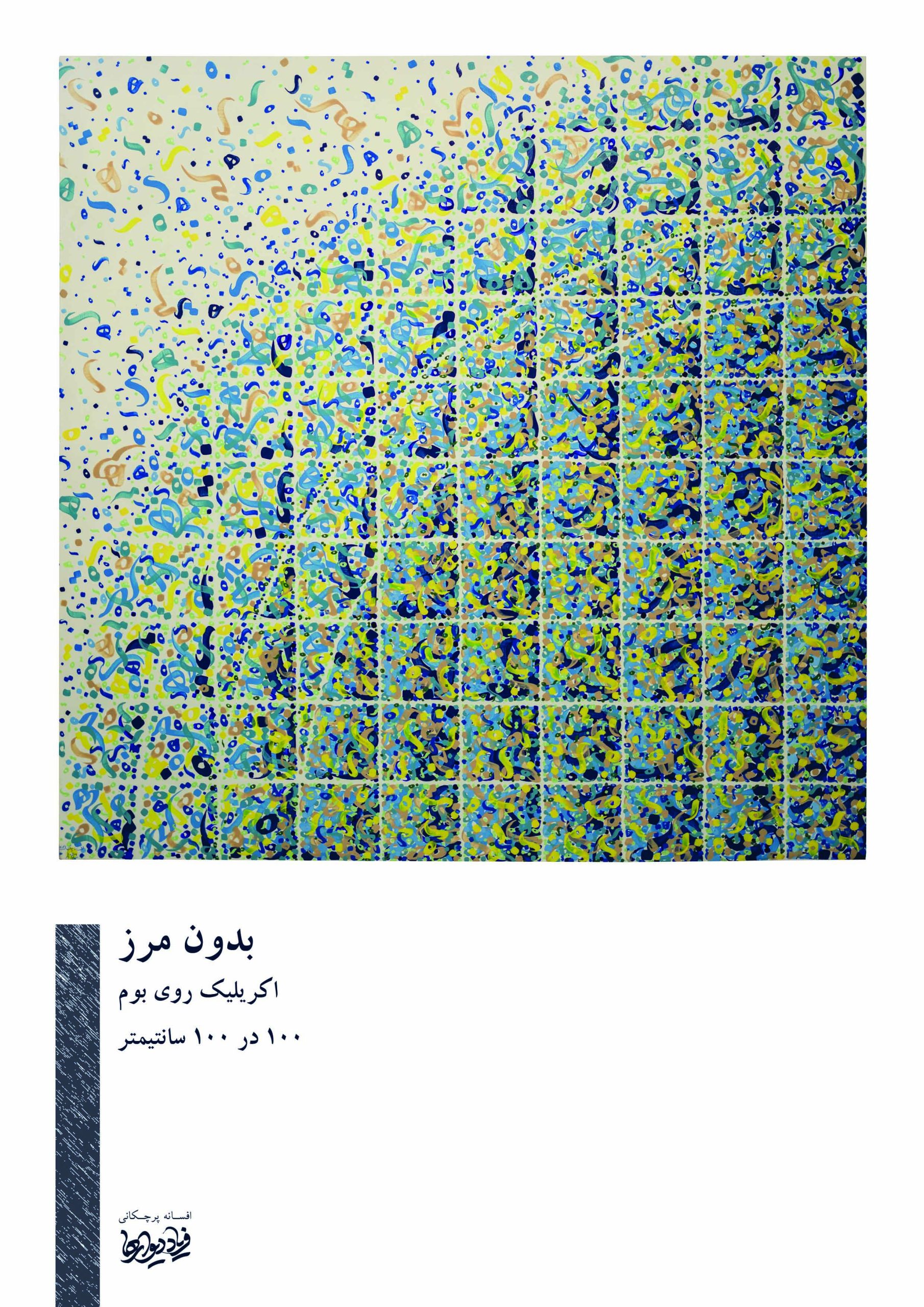 Page 013
Catalogue Page
Page 013
Catalogue Page
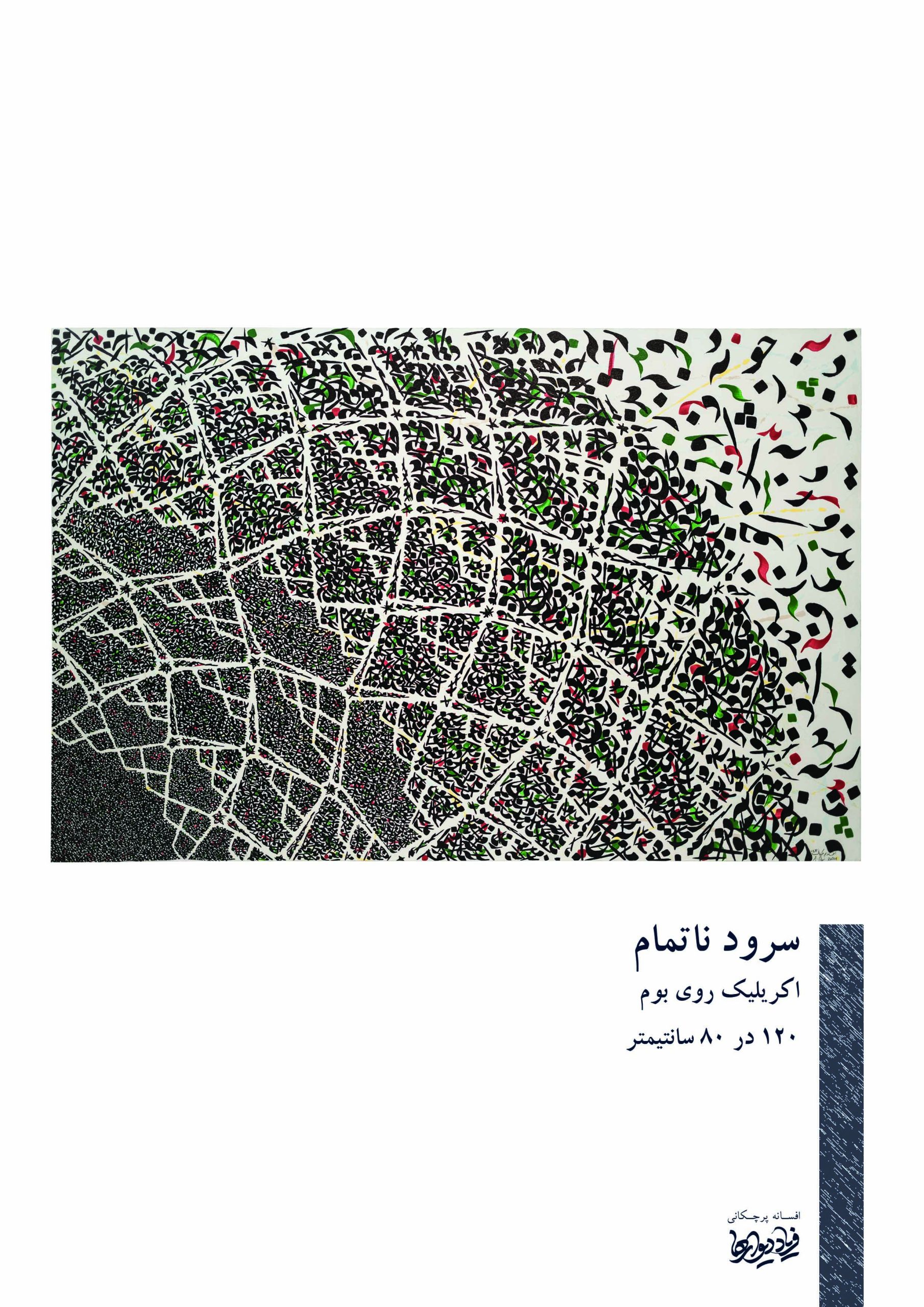 Page 014
Catalogue Page
Page 014
Catalogue Page
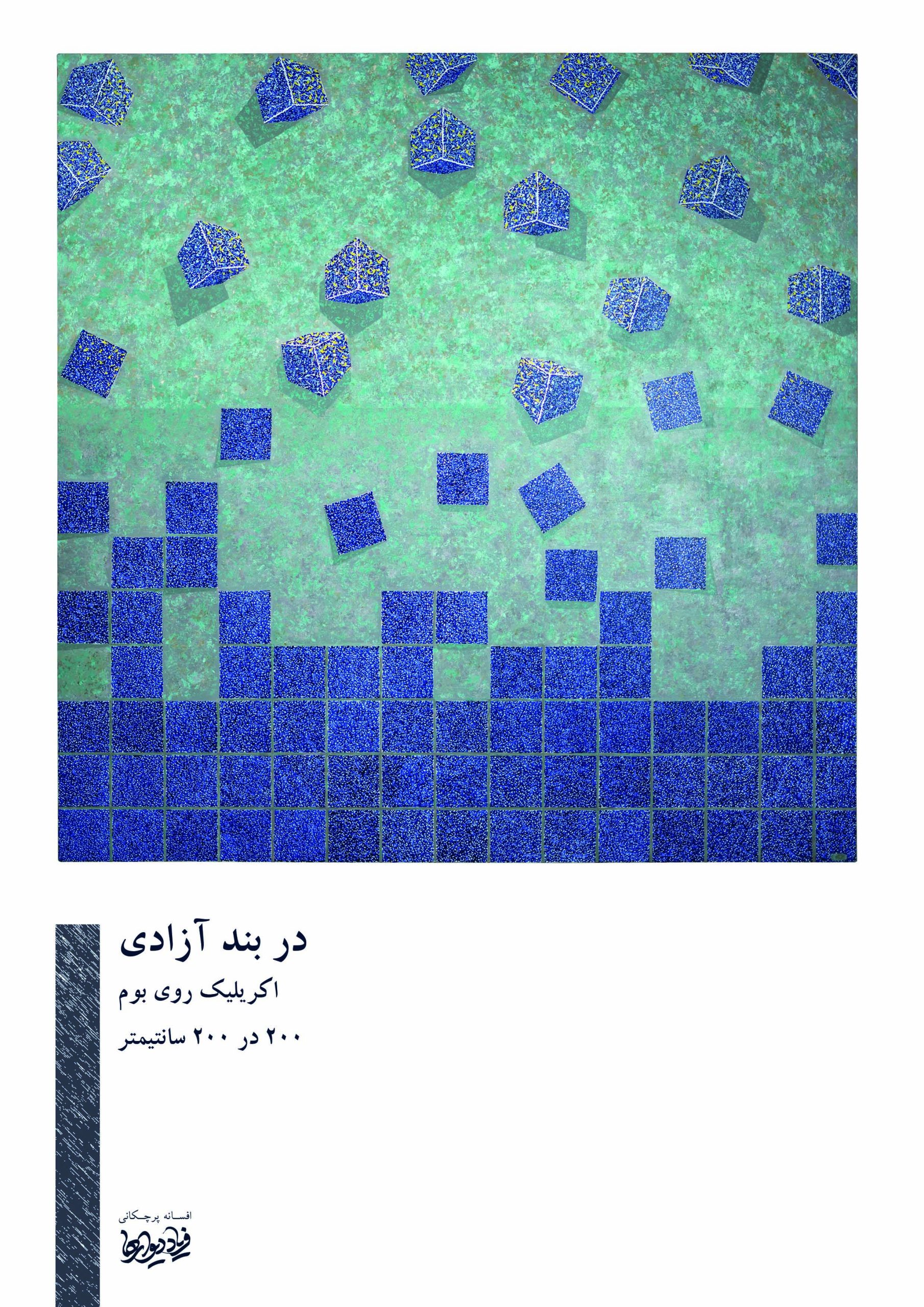 Page 015
Catalogue Page
Page 015
Catalogue Page
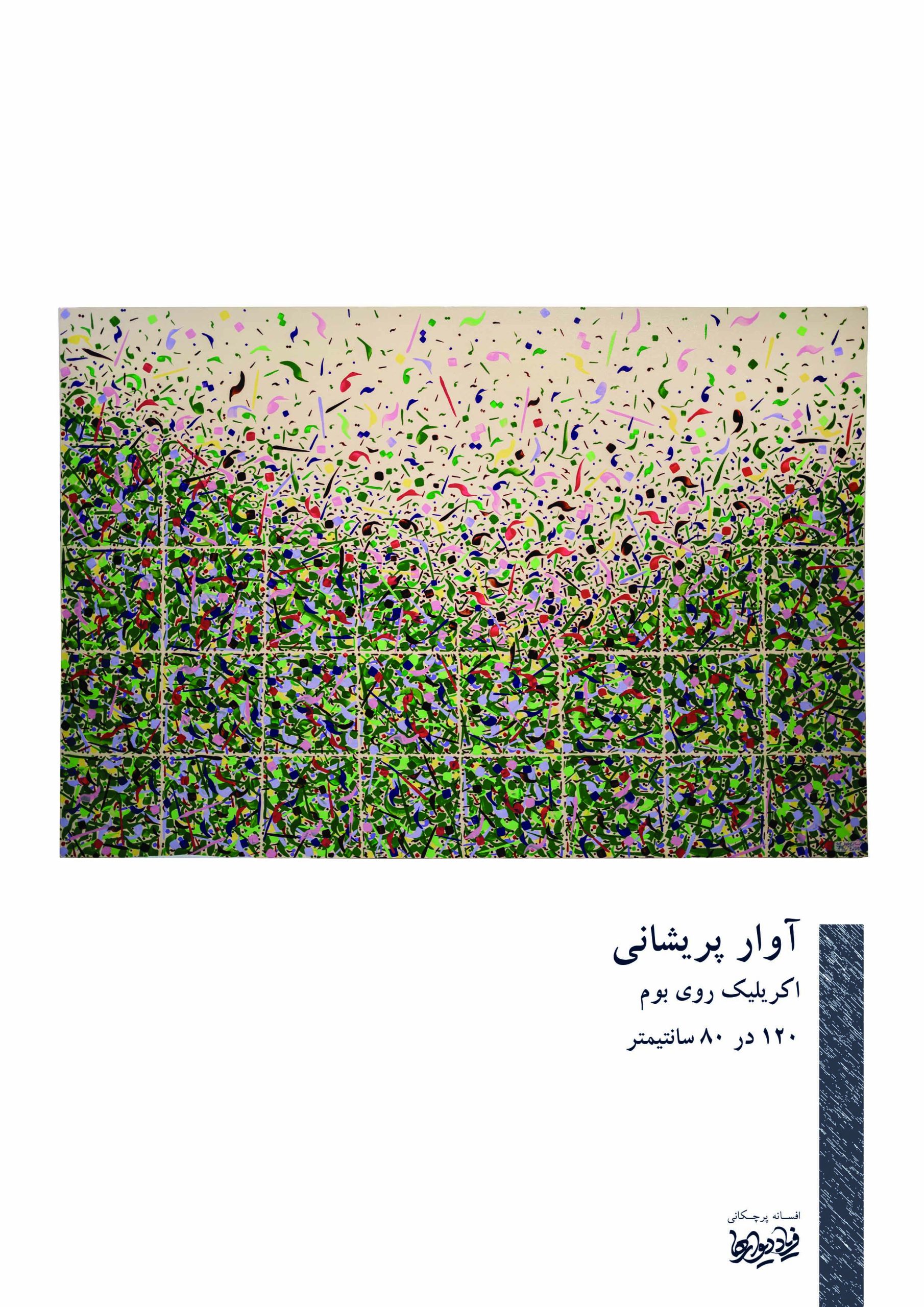 Page 016
Catalogue Page
Page 016
Catalogue Page
 Page 017
Catalogue Page
Page 017
Catalogue Page
 Page 018
Catalogue Page
Page 018
Catalogue Page
 Page 019
Catalogue Page
Page 019
Catalogue Page
 Page 020
Final Page
Page 020
Final Page
For more information about Faryade Divarha, available works, documentation or collaboration requests, please get in touch.